![[Valid RSS]](valid-rss-rogers.png "Validate my RSS feed")

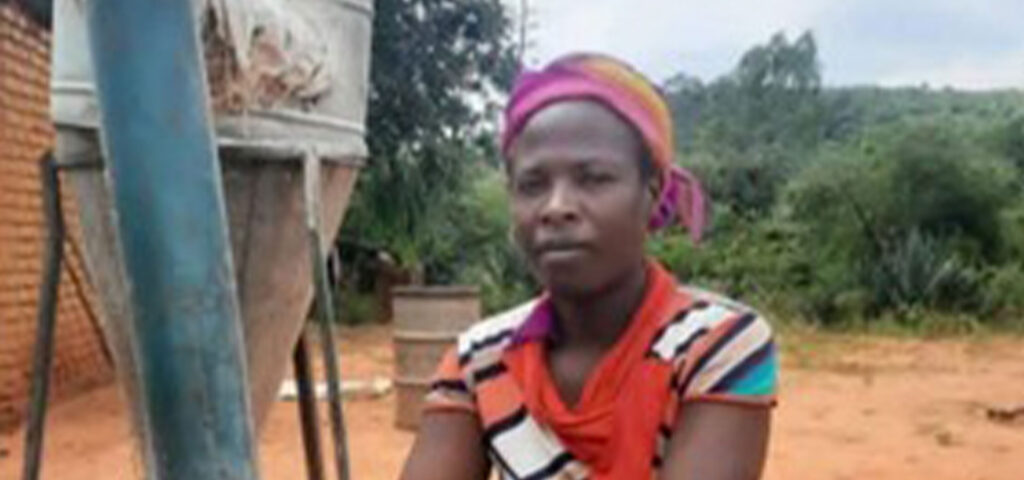
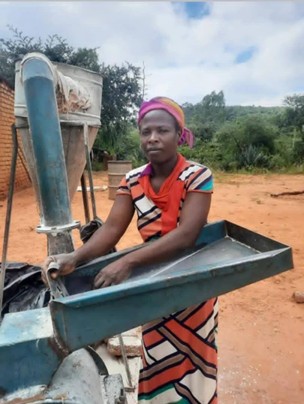
The steady sound of a grinding mill in Guruve District is more than just the processing of grain; it represents resilience, economic independence, and the transformation of one woman’s life. For Shamiso Gotami, a woman from Guruve District in Mashonaland Central Province, owning and operating a grinding mill has become a powerful symbol of how food value chains improves household income enabling her to pay school fees for her children’s education. Shamiso is a smallholder farmer who grows small grains such as millet, rapoko, sorghum and other climate resilient crops in Guruve, one of the districts often affected by droughts. Through income from selling surplus crops, Shamiso bought a grinding mill and adds value by milling and selling small grains flour (hupfu hwezviyo, mapfunde and mhunga). She has successfully been able to use the income and send her children to school. She is also able to sustain her family’s day-to-day household needs while making independent decisions about her life and livelihood.
Shamiso is one of the young women who have participated in IYWD facilitated skills and local knowledge sharing on agricultural and food value chains. The programme raises awareness on agricultural and food value chains and just-climate resilience building. Through partnering with the Zimbabwe Smallholder Organic Farmers’ Forum (ZIMSOFF), the programme also facilitates skills and local knowledge sharing on preservation of organic seeds to preserve local biodiversity. To date, IYWD has worked with more than 80 young women and women smallholder farmers who have acquired knowledge, skills and have been sharing local resources such as seeds and organic crops treatments that maintain local biodiversity. The programme contributes to economic autonomy of young women as well as building Sustainable or Ramangwana Homes that are self-sufficient while mitigating climate change impacts.
In many rural communities, women’s economic contributions often go unrecognised, and limited access to resources can leave them dependent and vulnerable to violence. In Zimbabwe, these dynamics are compounded by the direct impacts of climate change on women’s lives. According to Oxfam, Zimbabwe is one of the four Southern African countries significantly affected by climate patterns that have resulted in Elnino induced droughts. This has created the region’s worst food crisis in 40years. For Shamiso from Guruve District in Mashonaland Central Province, all these realities have part of her daily life. Through the knowledge and skills she gained under agricultural and food value chains programmes facilitated by the Institute for Young Women’s Development (IYWD) Shamiso’s life has transformed. “Everything in my life has changed. I attended many IYWD training sessions and lessons on leadership and agriculture value chains that changed my life. I have been able to move away from a life of gender based violence. My farming also improved. There have been many droughts here in Guruve but I have been able to grow crops that do not need much rainfall. I have not suffered from food shortages. In addition I have been able to get some income to send my children to school. I also bought a grinding mill and now I do milling and also sell hupfu hwezviyo, mapfunde nemhunga,” she said.
In 2021, Shamiso began rebuilding her life after many unpleasant situations she experienced. She began rebuilding as a smallholder farmer. She had previously participated in a Seed Fair held by IYWD in partnership with ZIMSOFF. During the seed fair, the women exchanged knowledge, skills and local organic seeds to promote climate resilient crops and attain food security. The harvest from the seeds, and the knowledge gained became the foundation of her economic independence. It enabled her to have adequate food for her family and to sell surplus. The income helped to expand her income sources as she acquired a grinding meal. This enabled her to sell both surplus raw grains and processed flour. From there, Shamiso has been expanding her value chain and diversifying her economic activities to retail and flea market business at the local business centre. Today, she sustainably carries out her seasonal farming, operates the grinding mill alongside her retail shop, increasing her disposable income and enabling her to support her children’s education. Her grinding mill has also become an important community resource, serving more than 200 households from surrounding villages.
Shamiso’s economic success also began to inspire other women in her community. Many people who had attended IYWD training with her witnessed the transformation in her life and were encouraged by her achievements. Beyond running her businesses, she became an example of how women’s access, control and ownership of economic resources can shift power dynamics for women, not only in creating sustainable livelihoods. But in enabling women to influence societal decision making.
Recognised by her family and community for her resilience and leadership, Shamiso was chosen as a village head. This is an extraordinary milestone in a context where traditional leadership often follows a male lineage in Zimbabwean tradition. In this position, she has championed women’s economic rights, advocating for land ownership for women in her village, which is a critical step toward long-term economic empowerment. Through her leadership she has also been championing climate response mechanisms that address the disproportionate impact it has in marginalised communities.
“I am now someone who is recognised in the community in Guruve. My own knowledge and experiences of how women are affected by gender based violence and disasters like droughts are part of my tools for decision-making in the community,” she shares.
Shamiso Gotami’s story illustrates the impact of IYWD’s feminist leadership and sustainable livelihoods approach. By equipping women with knowledge, skills, and confidence, the programme enables them to move from vulnerability to economic leadership. Today, Shamiso is not only a successful entrepreneur sustaining her family and community, but also a respected leader shaping decisions and advancing women’s rights in Guruve.
Shamiso’s transformation also resonates with Zimbabwe’s National Development Strategy 2 (NDS2) framework, which builds on inclusive economic growth, rural industrialisation, and women’s participation in productive value chains as key drivers of sustainable development. NDS2 emphasises strengthening household resilience, promoting value addition at community level, and ensuring that women actively participate in and benefit from economic opportunities. Shamiso is contributing to localised agro-processing, income diversification, and rural economic growth. Her journey reflects how women’s inclusion in value chains enhance livelihoods, reduce vulnerability, and advance gender-responsive economic development in Zimbabwe.